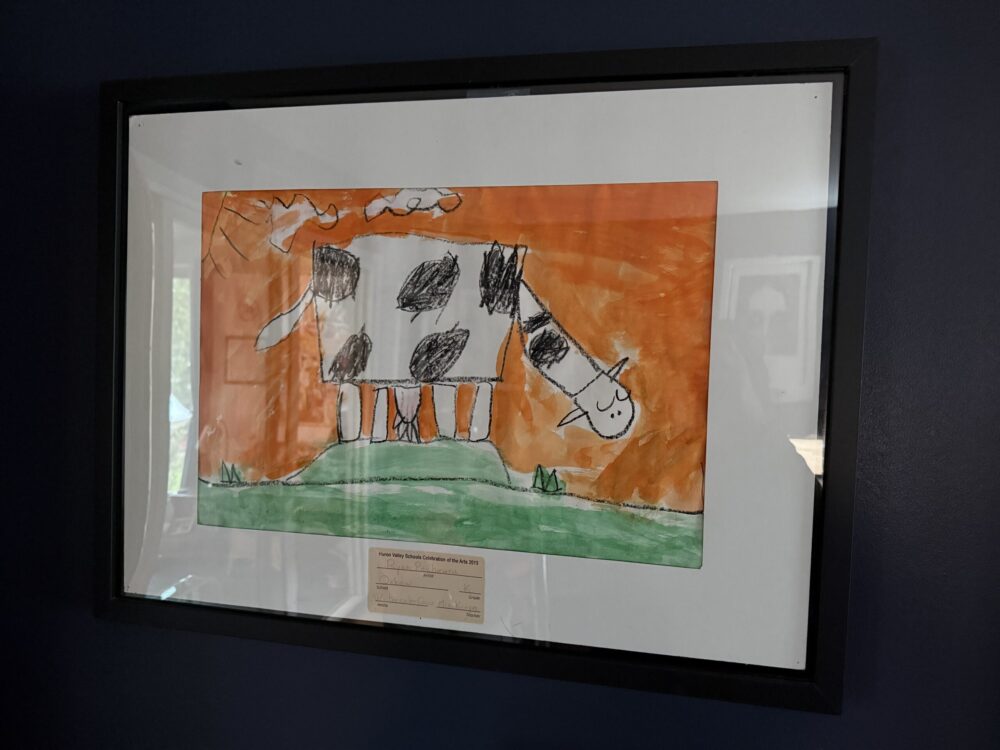
An open, expansive imagination is not only essential to being an artist, musician, or creative person, but also extremely valuable for our mental health – the psychology of our lives.
Our imagination is so powerful, cited by Psychology Today, is because, “Through imagination, people can explore ideas of things that are not physically present, ranging from the familiar (e.g., a thick slice of chocolate cake) to the never-before-experienced (e.g., an alien spacecraft appearing in the sky).
Unlike perception, imagination is not dependent on external sensory information taken from what a person can see, hear, feel, taste, or touch in the moment. Rather, it’s generated from within and often unconsciously influenced by memories and feelings.
Humans use imagination for a variety of reasons: to acquire experience and knowledge about the world, to better understand another person’s perspective, to solve problems, to create and interact with artistic works, and more. Imagination tends to go hand-in-hand with creativity and plays a pivotal role in the different stages of development,”.
Imagination lays the groundwork for problem-solving, innovation, and abstract thinking, which are crucial for children and for us as we mature into adults.
I can remember having quite an imagination as a child! I loved to play, create, and imagine the wildest dreams. Especially as an only child, the need to entertain myself required a broad imagination and the willingness to create.
Here are some of the ways I have used my imagination in my life:
- Play
- Music (percussion, guitar, piano, songwriting, singing)
- Painting and drawing
- Poetry
- Writing (for work today)
- Dancing
- Home design
- Cooking and culinary creativity (experimenting with Mediterranean-inspired recipes and meals)
- Garden design and cultivation
- Content creation and storytelling (translating lived experience into compelling articles)
- Lakeside and outdoor living spaces (designing and curating my sanctuary environment)
- Parenting and imaginative play (fostering creativity in my sons as they grew up)
- Puppet theater (I was inspired by seeing The Muppet Movie three times when it came out!)
Naturally, both of my sons are highly creative and were very imaginative as little boys, just like their mama. I also encouraged imaginative play and joined in the fun! To further grow our creativity and imagination, we all grew up watching Sesame Street and PBS Kids.
According to the experts at PBS (Public Broadcasting Station), “Creativity is the freest form of self-expression. There is nothing more satisfying and fulfilling for children than to be able to express themselves openly and without judgment.
The ability to be creative, to create something from personal feelings and experiences, can reflect and nurture children’s emotional health. The experiences children have during their first years of life can significantly enhance the development of their creativity.
Imagination is more important than knowledge. For knowledge is limited to all we now know and understand, while imagination embraces the entire world, and all there ever will be to know and understand. ~ Albert Einstein
How can toys help to develop a child’s imagination?
Toys are one crucial tool for helping children engage in creative and imaginative play. Toys inspire children to use their imaginations to create and explore rather than simply following instructions. Even Legos are different today than they were when I was growing up. We used to buy an assortment of Legos and create our own designs. Now, Legos are sold in sets with directions!
Building blocks are a classic example of a toy that allows creative play. They can be used to create anything from complicated structures to simple towers. The mere act of building encourages problem-solving and planning as children figure out how to fit pieces together. As a kid, I loved combining my blocks and Legos to build whole cities!
Dress-up clothes are another great way to encourage creative play. Children can use their imaginations to create stories and scenarios with the outfits they assemble. It also helps to build problem-solving skills as children figure out how to piece together the different items. My youngest son absolutely loved dressing up. I saved most of the clothes to play with my (hopefully) grandchildren later.
Toys that inspire creativity and imagination are toys that do not “do” anything. Instead, these toys are designed to inspire play by encouraging imagination and creativity to bring the toy to “life.” For example, below is a short list of my favorite inspirational toys:
- Building blocks
- Dress-up clothes
- Art supplies
- Clay and Play-Doh
- Cardboard boxes
- Puppet theatre
- Musical instruments
- Imaginary play sets
- Stuffed animals
Art supplies can be used to create anything the child can imagine, and they help develop fine motor skills. We still have drawers full of craft supplies!
Clay and Play-Doh are great for exploring creativity in a tactile way. Children can form the dough into any shape or object they can imagine.
Cardboard boxes can be transformed into anything children can imagine, encouraging problem-solving and imagination. I remember one time with my oldest son, his dad, and me helping him create a minivan complete with moving windows and a steering wheel. He loved that so much and would play for hours in that old box!
Puppet theatres are a great way to engage children in storytelling and imaginative play. Children can create their own stories and scenarios with puppets and props.
Musical instruments are another way to explore creativity. Children can learn to play songs, create their own music, and explore their musical side, building self-expression and fine motor skills. Bonus – music also helps build the skills we need to solve math problems.
Imaginary play sets are also an excellent tool for inspiring creativity and imagination. These sets can be used to create pretend scenarios and stories, encouraging creativity and problem-solving skills.
Stuffed animals are another way to engage in creative play. Children can create stories and scenarios with the animals, exploring their imaginations while building self-expression and communication skills. I loved my stuffed animals and put on many musical concerts for them!
Is imagination a sign of intelligence?
Not to toot my own horn, my sons or my parents – but we are all highly intelligent people. My mom was a brilliant poet and a beautiful singer; my dad was a highly talented guitarist; and I was identified as gifted in third grade, going on to earn a degree with high distinction from the University of Michigan. My sons are still growing into adulthood, so we’ll see where their imagination and intelligence take them!
Imagination as a sign of intelligence, referring again to Psychology Today, they report that, “Daydreaming (or mind-wandering) is an information-processing state that combines knowledge and imagination, the dynamic duo. Being more imaginative allows a person to make creative connections and inferences using their past experience and knowledge base. As a result, research indicates that more robust daydreaming is associated with superior intelligence,”.
Why is our imagination so powerful psychology
In conclusion, imagination is one of our greatest mental assets — fueling creativity, intelligence, and emotional health across every stage of life.