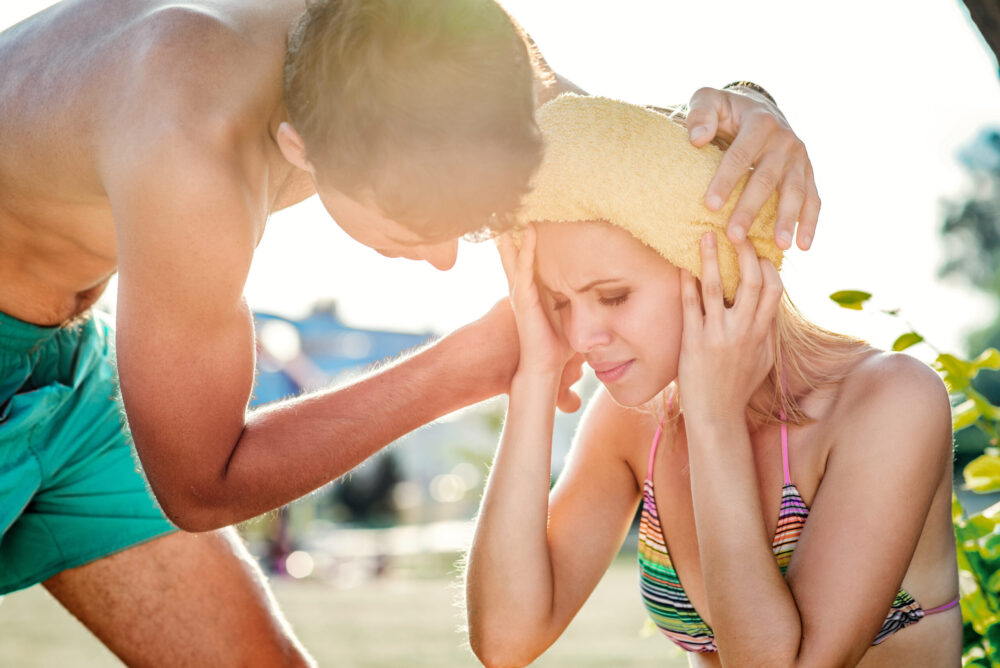
Most people who have not lived or visited anywhere in Michigan or Southeastern Canada realize that temperatures can reach extreme levels, causing dangerous conditions for folks in the vulnerable category and pets.
Furthermore, for those who do not have the means or access to air conditioning or lakes to swim in, they, too, run serious risks of heat stroke or heat sickness especially with the current heat wave we are experiencing.
Michigan or Southeastern Canada weather is not the same as in the Pacific Northwest or Southwestern Canada, and I’m not just talking about the cold, harsh winters. In fact, during the summer months, Southwestern Canada has much milder temperatures and far less humidity.
According to Weatherspark, “Summer Weather in Vancouver British Columbia, Canada
Daily high temperatures increase by 5°F, from 65°F to 69°F, rarely falling below 59°F or exceeding 80°F. The highest daily average high temperature is 73°F on August 2.
Daily low temperatures increase by 4°F, from 52°F to 56°F, rarely falling below 48°F or exceeding 62°F. The highest daily average low temperature is 58°F on August 1.
For reference, on August 1, the hottest day of the year, temperatures in Vancouver typically range from 58°F to 73°F, while on January 2, the coldest day of the year, they range from 35°F to 42°F,”.
While it doesn’t get as hot or humid, the dry conditions increase the risk of wildfires in Vancouver, Canada, and other parts of the Pacific Northwest in the United States.
As lifelong Michiganders, growing up with hot, humid Pure Michigan summers, we learned to stay cool by finding a river, stream, pond, sprinkler, or a Great Lake to cool off in. Some ways to cool off with water could include, but are not limited to:
- Swimming
- Kayaking
- Boating
- Wading
- Putting your feet in (like my mom did, as she did not swim)
- Floating on a river
- Wakeboarding
- Water skiing
- Surfing behind a wake setter boat (which is controversial in some of the inland lake communities)
How to beat the heat without ac in summer
If you can’t get to a body of water, another solution to beat the heat inside one’s home is to be very strategic with fan placement. Although it wasn’t very effective, it was all we had when I was a little girl.
For example, during the daytime, the fans would be pointed outwards to blow the hot air back outside. We would also keep the curtains drawn and closed to keep it shaded in an attempt to cool it down.
At night, we turned the fans around to blow the cooler night air throughout the house, and before bed, we would either take a cold shower or just put our feet in the tub to run cold water over them.
We would also get a washcloth, drench it with cold water, and put it on our faces and the backs of our necks to cool our bodies. If that weren’t enough because it was still too hot despite the sun being down- we would camp out in the basement.
No worries, we had a clean, finished basement where we set up cots and brought a little radio to listen to in case there were storm threats, as there typically are when it’s very hot and humid.
When my sons were little, one summer, our air conditioning was on the fritz, and it was going to be costly to repair, for which we did not have the funds to address at the time. So, I explained to my family that we were going to “sweat it out” to beat the heat that summer and that I knew exactly what to do as I grew up without air conditioning.
It is also important to drink plenty of cold water, stay hydrated, and limit strenuous activities if possible.
What to do during extreme heat
During that summer without AC, our solution was to do what my mom had done when I was little, as well as what is listed above. However, we had even more cooling solutions, because we live across the street from the lake. We swam to stay cool during the day and hunkered down in our finished basement to sleep comfortably at night.
In fact, where we live, there are many lakes, hence why our community is nicknamed the Lakes Area. The inland lakes around here are well maintained and clean, with great fishing. Additionally, this area is home to several state, county, and city parks, offering places to find some shade and stay cool.
Metromode, a digital news magazine, cites the following about Oakland County lakes:
- “Oakland County’s lakes are a gift from the ice age (The lakes are the result of the de-glaciation of this region about 17,000 years ago)
- Native people first knew the beauty of Oakland’s lakes (Historical records from the early 1800s suggest the lakes drew native American populations, presumably for their rich stores of fish and birds…The Potawatomi maintained a seasonal village in the northwest shore of Walled Lake as late as the 1820s)
- Oakland County’s lakes were once the “up north” to Detroiters (to some, they still are)
- Lakes are for the birds (Fall migration season means Oakland County’s lakes welcome a variety of duck, geese and swan)
- Lakes spur industry… and connect generations
- Lakes boost property values (Oakland County’s lakes add more than $1 billion in value to Oakland County’s residential properties…water-based recreation generates about $200 million annually in the county.)
- Lakes are managed by the people who live on them (Addressing lake and watershed health issues is an important part of the work of a lake association or lake management board, which is a collective of local government and resident stakeholders who work collaboratively to monitor such things as water bacteria and invasive aquatic species and plants.)
- Shorelines are critical to lake health
A judge sets many of Oakland County’s lake levels (By law, 54 of Oakland County’s lakes in the river basins of the Clinton, Huron, Rouge, Shiawassee and Flint Rivers have water levels which are monitored and maintained by court order to provide flood control, maximize recreation and protect property values.),”.
How to beat the heat
In conclusion, beating the heat is about preparation, creativity, and common sense—stay hydrated, seek shade, use water wisely, and remember to look out for vulnerable neighbors, friends and family.